One of the most common questions solo real estate agents ask is also one of the hardest to answer clearly:
How often should I follow up with leads without annoying them?
Some agents worry they’re following up too much.
Others stop too early because they don’t want to seem pushy.
In reality, most agents don’t lose leads because they followed up too often.
They lose leads because they didn’t follow up enough—or didn’t follow up consistently.
Let’s break down what actually works in real-world situations.
Why Follow-Up Frequency Matters More Than You Think
When a lead reaches out, they’re usually not ready to make a decision immediately.
They might be:
- Comparing agents
- Gathering information
- Unsure about timing
- Distracted by everyday life
Follow-up isn’t about forcing a decision.
It’s about staying visible while that decision is forming.
If you disappear too early, someone else fills that gap.
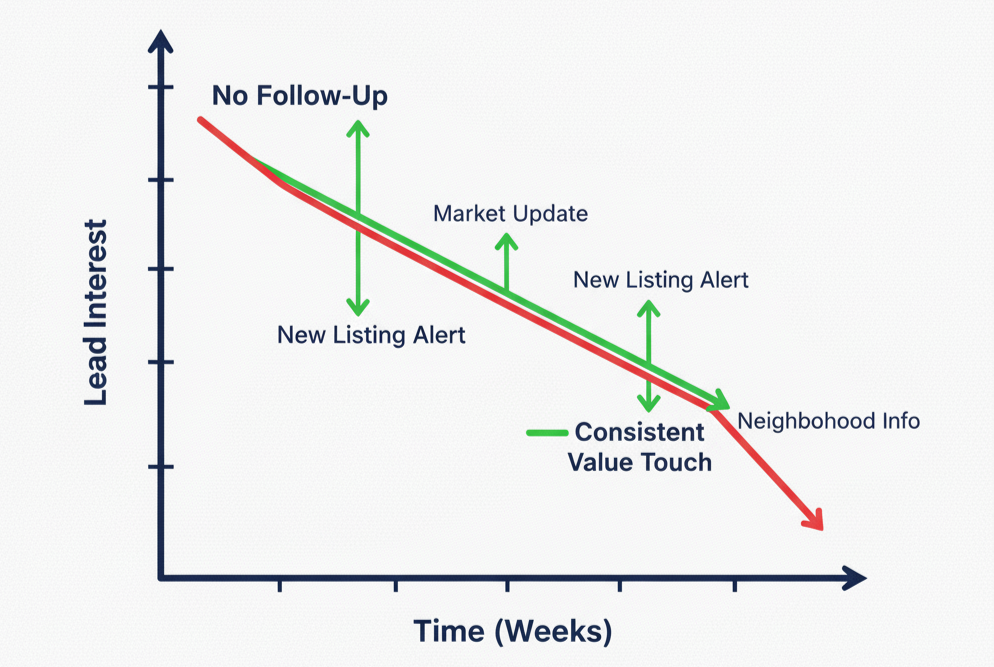

The Biggest Mistake Agents Make With Follow-Up
Most agents don’t have a follow-up plan.
They rely on:
- Gut feeling
- Memory
- “I’ll check back later”
The result is inconsistent contact. Some leads get too much attention early on, while others are forgotten completely.
A simple structure matters far more than perfect wording.
A Realistic Follow-Up Timeline for Real Estate Leads
There’s no single rule that works for every situation, but there is a practical framework solo agents can follow.
First 24 Hours: Fast Matters
The first response should happen as quickly as possible.
Even a short message acknowledging the inquiry helps:
- It shows professionalism
- It keeps the lead engaged
- It prevents them from moving on
Speed here matters more than detail.
Days 2–7: Consistent, Not Constant
During the first week, light but regular contact works best.
This might include:
- A follow-up message with helpful information
- A quick call if appropriate
- A check-in that references your earlier conversation
The goal during this phase is simple: stay present without overwhelming them.
Weeks 2–4: Steady and Value-Focused
After the initial interest cools, many agents stop following up altogether.
This is often when leads are still deciding.
At this stage:
- Reduce frequency
- Increase relevance
- Focus on value
Sharing a useful insight or relevant listing keeps the relationship alive without pressure.
After One Month: Periodic, Long-Term Follow-Up
Some leads aren’t ready for months.
That doesn’t mean they’re dead.
Occasional check-ins over time—done respectfully—often lead to conversations restarting when timing changes. Many deals come from leads that went quiet and resurfaced later.
Why “Too Much Follow-Up” Is Rarely the Real Problem
Agents often worry about annoying leads.
In practice, what annoys people isn’t frequency—it’s irrelevance.
Messages feel intrusive when they:
- Say nothing new
- Ignore context
- Feel automated or generic
Follow-up that’s thoughtful and relevant is usually welcomed, even if it happens more than expected.
How Solo Agents Can Stay Consistent Without Overthinking
The hardest part of follow-up isn’t knowing what to do—it’s remembering to do it.
Solo agents juggle:
- Showings
- Calls
- Paperwork
- Personal life
Relying on memory alone makes consistency almost impossible.
That’s why many solo agents eventually move toward a structured follow-up system that:
- Keeps track of timing
- Reminds them when to reach out
- Organizes conversations in one place
When follow-up becomes part of a system instead of a mental task, it’s much easier to maintain.
If you want to see how this looks in a real setup designed specifically for solo agents, this guide explains it in detail:
👉 CRM for Real Estate Solo Agents: Automate Follow-Ups & Close More Deals
Final Thoughts
There’s no perfect follow-up schedule.
But there is a difference between intentional follow-up and accidental follow-up.
Agents who stay visible, relevant, and consistent over time win more conversations—and more deals—without feeling pushy or salesy.
For solo agents, the goal isn’t to follow up more.
It’s to follow up better.