If you’re a solo real estate agent, follow-up can feel like a moving target.
You respond to a lead.
You mean to check back.
You get busy.
And somehow, the conversation fades away.
This usually isn’t a motivation problem.
It’s a structure problem.
This checklist walks through a realistic follow-up process that solo agents can actually maintain—without a team, without burning out, and without losing track of good opportunities.
Why Most Follow-Up Advice Doesn’t Work for Solo Agents
A lot of follow-up advice sounds good on paper but ignores the reality of solo agents.
Most strategies assume you have:
-
An assistant handling admin work
-
Plenty of uninterrupted time
-
Someone reminding you what to do next
Solo agents don’t work that way.
You need a follow-up process that fits around showings, calls, driving, family time, and everything else that fills a real day. That’s what this checklist is built for.
The Solo Agent Follow-Up Checklist
You don’t need to follow up perfectly.
You just need to follow up consistently.
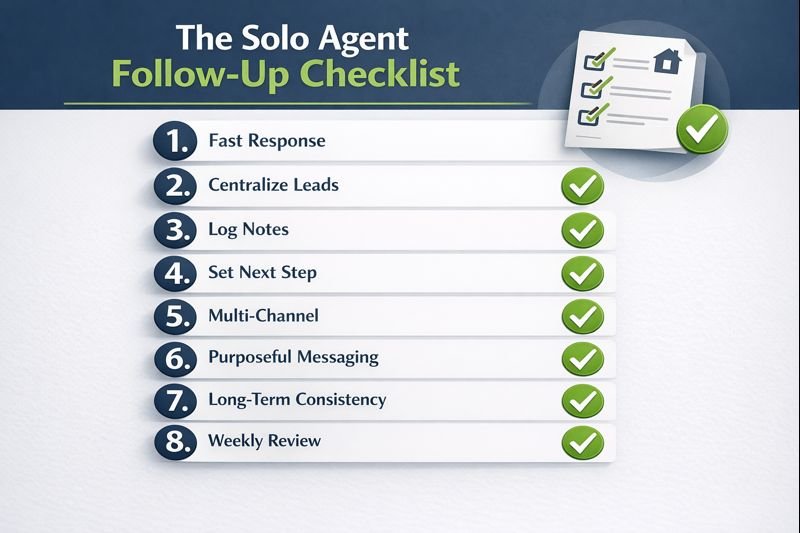
Step 1: Respond Immediately (Even If Brief)
The goal of the first response is speed, not detail.
A short acknowledgment is often enough:
-
Letting the lead know you saw their message
-
Buying yourself time to follow up properly
An immediate response keeps the conversation alive and prevents the lead from moving on while you’re tied up elsewhere.
Step 2: Capture the Lead in One Place
As soon as a lead comes in, it should live in one central place.
If leads are scattered across inboxes, message apps, and notebooks, follow-up becomes unreliable. You end up searching for information instead of continuing conversations.
The tool you use matters less than the habit itself—everything should be easy to find when you need it.
Step 3: Log the First Conversation
After the initial conversation, take a moment to note what matters.
That might include what they’re looking for, their general timeline, or something personal they mentioned. This doesn’t need to be detailed or time-consuming.
Even a few notes make future follow-ups feel relevant instead of generic.
Step 4: Decide the Next Follow-Up Before the Conversation Ends
One of the most common reasons leads disappear is that there’s no clear next step.
Before moving on, decide when you’ll follow up again. It might be tomorrow, later in the week, or sometime next week. Even if the lead says they’ll reach out, having your own reminder keeps things from slipping through the cracks.
Follow-up works best when it’s intentional.
Step 5: Don’t Rely on Only One Communication Channel
Many solo agents default to one way of following up—usually whatever feels most comfortable.
In reality, people communicate differently. Some never answer calls but reply quickly to texts. Others ignore texts and respond to email instead. Using more than one channel isn’t about bothering people. It’s about making sure your message is actually seen.
Good follow-up is about presence, not pressure.

Step 6: Make Every Follow-Up Message Serve a Purpose
Generic follow-ups rarely get responses.
Messages like “just checking in” don’t give the other person a reason to reply. More effective follow-ups have a clear purpose. That might be sharing a relevant listing, offering a quick insight, or asking one simple question that moves the conversation forward.
When your follow-up is useful, it feels natural—not pushy.
Step 7: Follow Up Longer Than Feels Comfortable
A lot of agents stop following up too early.
If someone goes quiet, it’s easy to assume they’ve lost interest. In reality, people get distracted, busy, or unsure. Silence usually means timing isn’t right yet—not that the opportunity is gone.
Consistent, respectful follow-up over time is often what separates agents who close deals from those who wonder what happened.
Step 8: Review Your Leads Once a Week
One habit that makes a big difference is a weekly lead review.
This doesn’t need to take long. A quick scan to see who hasn’t replied, who might need another touch, and who seems to be warming up can prevent leads from quietly disappearing.
Small reviews done regularly beat big cleanups done rarely.

Why This Checklist Is Hard to Maintain Manually
On paper, this process looks simple.
In real life, reminders get forgotten. Notes end up scattered. Follow-up depends on memory. Then a busy week hits, and everything falls apart.
This is where many solo agents get frustrated—not because the checklist doesn’t work, but because it’s hard to stay consistent without support.
How Successful Solo Agents Make This Easier
Agents who maintain consistent follow-up usually aren’t relying on memory alone.
They keep leads in one place, set reminders instead of trusting themselves to remember, and use simple systems to support the process. This reduces mental load and makes consistency possible—even during hectic weeks.
If you want to see how this checklist fits into a real workflow built specifically for solo agents, this guide walks through it step by step:
👉 CRM for Real Estate Solo Agents: Automate Follow-Ups & Close More Deals
Final Thoughts
Follow-up doesn’t need to be complicated.
It needs to be intentional, organized, and consistent.
When follow-up improves, conversations improve. Trust improves. Conversions improve.
For solo agents, the right checklist isn’t about doing more—it’s about missing less.